
Dogs use a lot of body language to express their feelings that can communicate everything from joy to fear. As responsible pet owners and animal lovers, it’s crucial to understand these signals to ensure the well-being of our furry friends. This understanding is especially important when it comes to respecting their boundaries and knowing when to step in to protect them.
Understanding Your Dog’s Body Language
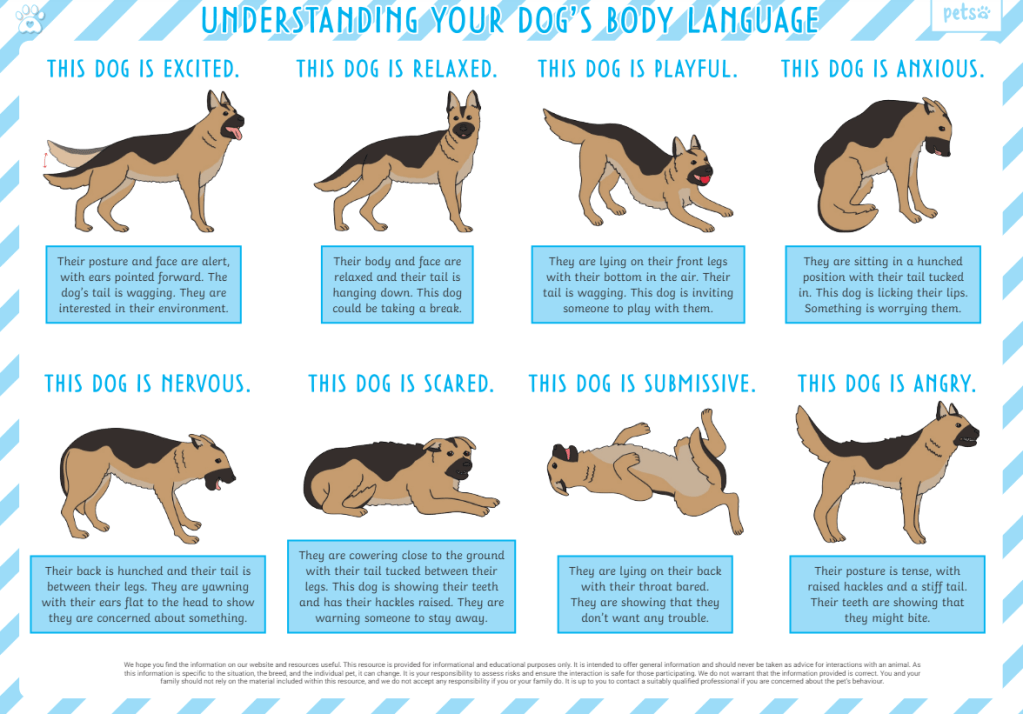
- Tail Position and Movement:
- Wagging Tail: A wagging tail isn’t always a sign of happiness. The speed and direction can indicate different emotions. A slow wag can mean insecurity, while a rapid wag with a loose body suggests excitement.
- Tail Tucked: A tail tucked between the legs signals fear or submission. Your dog might feel threatened or anxious.
- Ears:
- Erect Ears: When a dog’s ears are up and alert, they are focused and attentive. This can indicate curiosity or readiness.
- Flattened Ears: Ears pressed back against the head often signify fear, anxiety, or submission.
- Eyes:
- Soft Eyes: Relaxed and soft eyes suggest a calm and content dog.
- Whale Eye: When the whites of the eyes are visible, it can mean the dog is feeling anxious or threatened.
- Body Posture:
- Relaxed Body: A loose, relaxed body posture indicates comfort and happiness.
- Stiff Body: A stiff, tense body can signal stress, fear, or aggression.
- Mouth:
- Relaxed Mouth: A slightly open mouth with a lolling tongue generally indicates a happy, relaxed dog.
- Lips Pulled Back: Lips pulled back, showing teeth, can be a sign of aggression or fear.
Respecting Your Dog’s Boundaries
Dogs, like humans, have their personal space and boundaries. Respecting these boundaries is essential for building trust and a strong bond.
- Avoid Forcing Interactions: If your dog is not comfortable with being petted or approached, don’t force them. Allow them to come to you on their terms.
- Safe Spaces: Ensure your dog has a designated safe space where they can retreat when they feel overwhelmed or scared.
- Observe and Adapt: Pay attention to your dog’s body language. If they seem uncomfortable or stressed, give them space and avoid any action that might exacerbate their anxiety.
When to Step In and Protect Your Dog
Knowing when to step in and protect your dog is crucial for their safety and well-being. Here are some situations where you should intervene:
- Encounters with Aggressive Dogs: If an aggressive dog approaches, calmly and assertively intervene to create space between your dog and the threat.
- Overwhelming Social Situations: In crowded or noisy environments, if your dog shows signs of stress, it’s best to remove them from the situation.
- Physical Harm: If someone or another animal poses a physical threat to your dog, step in immediately to prevent harm.
Teaching Kids When It’s Safe to Say Hi
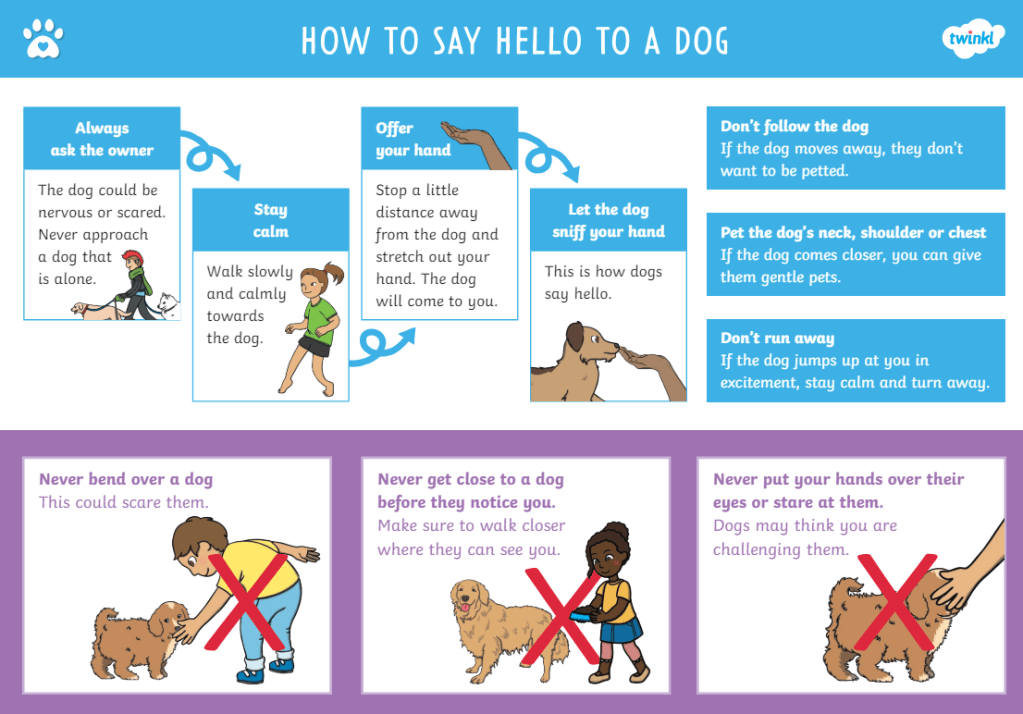
Educating children on how to approach and interact with dogs is vital for their safety and the dog’s comfort.
- Ask for Permission: Always teach kids to ask the dog owner’s permission before approaching or petting a dog.
- Approach Calmly: Children should approach dogs calmly and slowly, avoiding sudden movements that might startle the dog.
- Gentle Petting: Show kids how to gently pet a dog, avoiding sensitive areas like the face and tail.
- Recognize Signs of Discomfort: Teach children the basic signs of a dog’s discomfort, such as a tucked tail, flattened ears, or a stiff body. If they notice these signs, they should back away and give the dog space.
Twinkl offers a wide range of engaging and educational resources to teach kids how to properly approach and interact with dogs and other pets. These resources are designed to be fun and informative, helping children develop a love for learning about responsible pet care and building positive relationships with animals.
Understanding and respecting your dog’s body language and boundaries fosters a safer and more harmonious relationship. By educating ourselves and our children on these essential aspects, we can ensure that our interactions with dogs are positive and respectful, creating a happy environment for both humans and their canine companions.
 Becoming Carms
Leave a comment